
Persians
Ancient Theatre of Epidaurus
Theatrical Play
2020
-
Persians
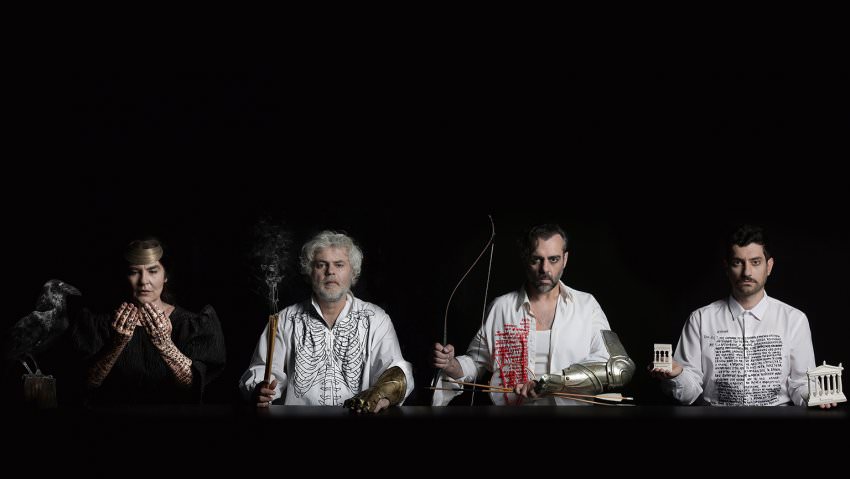
A theatrical play in the ancient drama category. Staged at Ancient Theatre of Epidaurus. Presented at Athens & Epidaurus Festival. Directed by Dimitris Lignadis. Starring Argyris Pantazaras, Nikos Karathanos, Giannos Perlegkas, Argyris Xafis, Laertis Malkotsis and others. Production of 2020.
Photos

Videos

Trailer 00:35
Contributors
Αμαλία Μουστάκη
It is said, without being historically confirmed, that, after the victorious naval battle of Nafpaktos for the Christian forces (1571), and the crushing of the Turkish armada, Greek students of Lower Italy gave a performance of Aeschylus's “Persians” to celebrate the event. And that this was the first show of tragedy in the new times. Later, in the years leading up to the revolution of 1821, there was also a revival of interest in the work with recitations and performances in the dynastic dominions. It is this, the “patriotic” dimension of this particular tragedy that seems to have inspired most of its more recent uploads, linking it to current affairs and historical circumstances. On the other hand, however, the Persians have another dimension, more “chthonic” and more “demonic”. Dimitris Lignadis's direction for this year's performance of the National Theatre straddles between these two dimensions. He does not ignore the ideological load of the text, succumbs to the dramatic empathy of patriotic phrases that are overemphasized in order to attract the applause of the audience (and distract it), and on the other hand he takes care not to crush the philosophical and religious thought of the poet by trying to highlight the settlement between the human being. of the divine order of things. And if no one can treat Lignadis unilaterally, on the other hand it is not difficult to realize that this assembly is not always successful. Stylization and rhetoric (Koniordou) involved with some freer forms (Karathanos), without always being able to create a solid union.
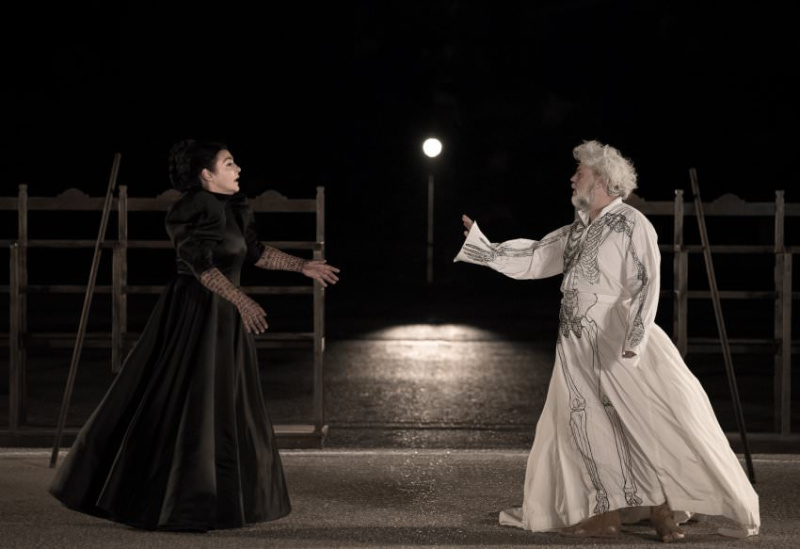
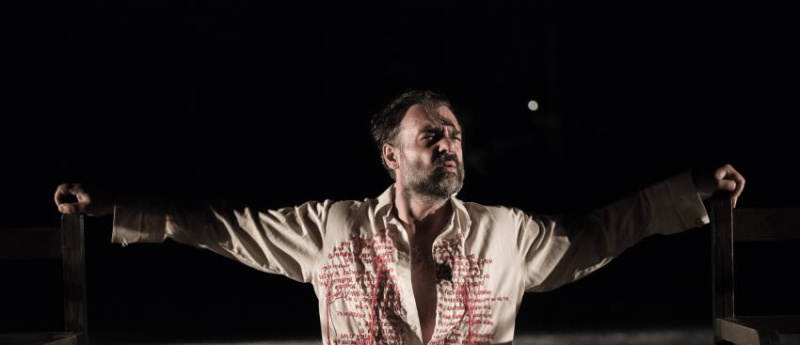
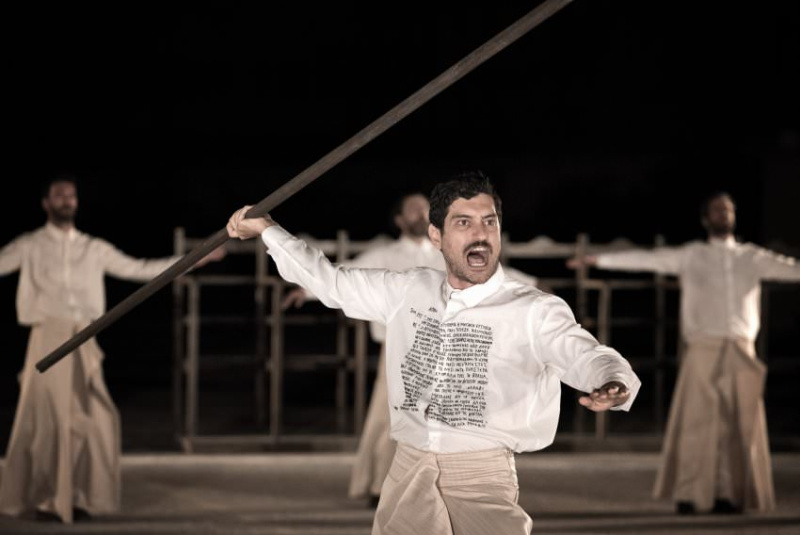
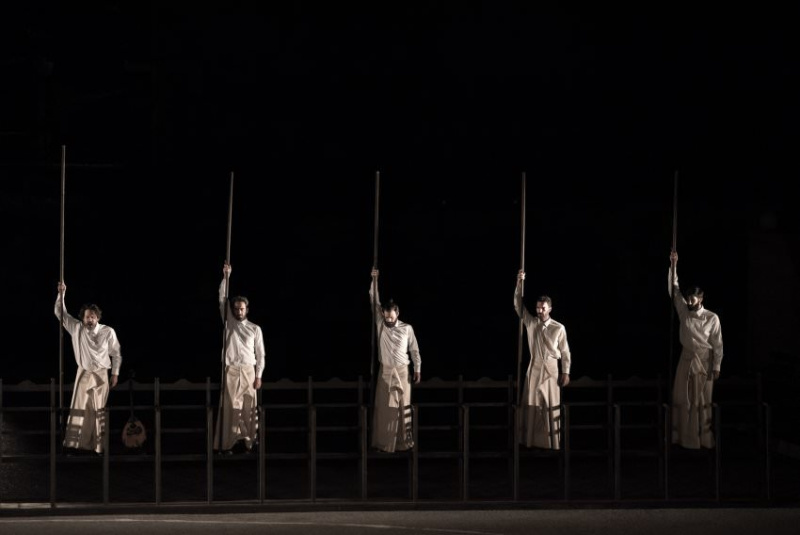
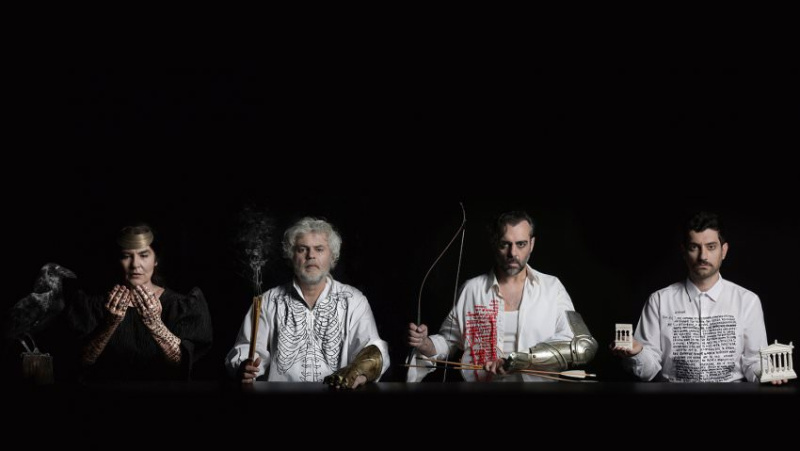
Unsuccessful is the “assembly” sought and against which parts of the tragedy, such as the member and the face. As in this work it is the “barbarians” who are the protagonists, the way in which they manifest grief and suffering through music is indicative of the reception and presentation of the “stranger”. Oriental rhythms predominate. On the other hand, the appearance and the overall presence of the Dance of the “old” Persians - which only old people do not see in front of us! - with the formalistic mood of the costumes that refer to a kind of illustration, but also the stalls that make up the stage, introduce Christian references to the performance.
However, and despite the above objections, the artistic excellence of the actors outweighs the prestige of this unique ancient tragedy based on historical fact rather than myth. Special reference to the pure expression of speech - it is clear that the director focused on the sounds, the “syntactic” of words and scenes. Maybe this partly led to dehydration of emotion, but it allowed us to hear the work more clearly than ever before!
Dimitris Lignadis's Persians is not a stage attempt with a clear vision, but it does claim a worthy place among the performances worth seeing this summer.
Image may contain: one or more people and text