Last stations:
2 & 3/9: Thessaloniki
9 & 10/9: Herodion

Persians
Periodeia
Theatrical Play
2022
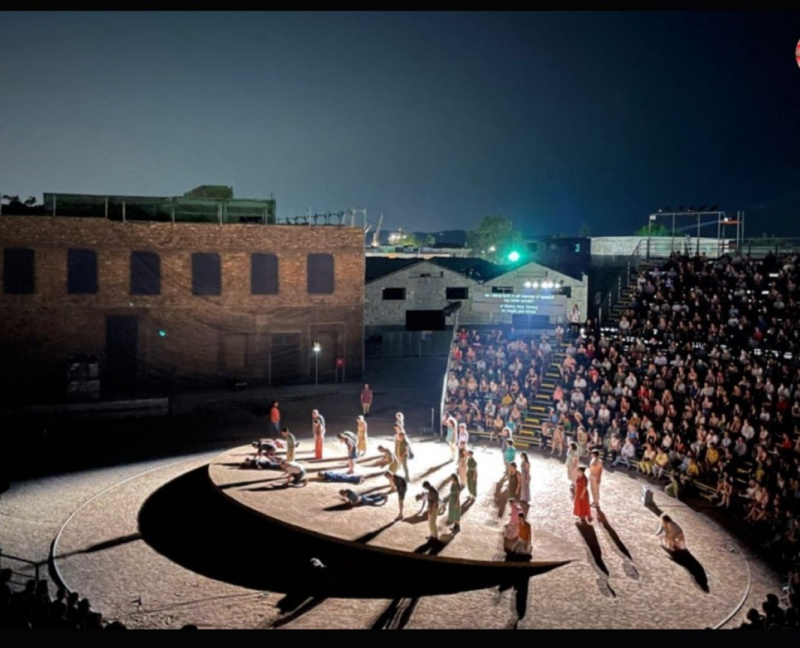
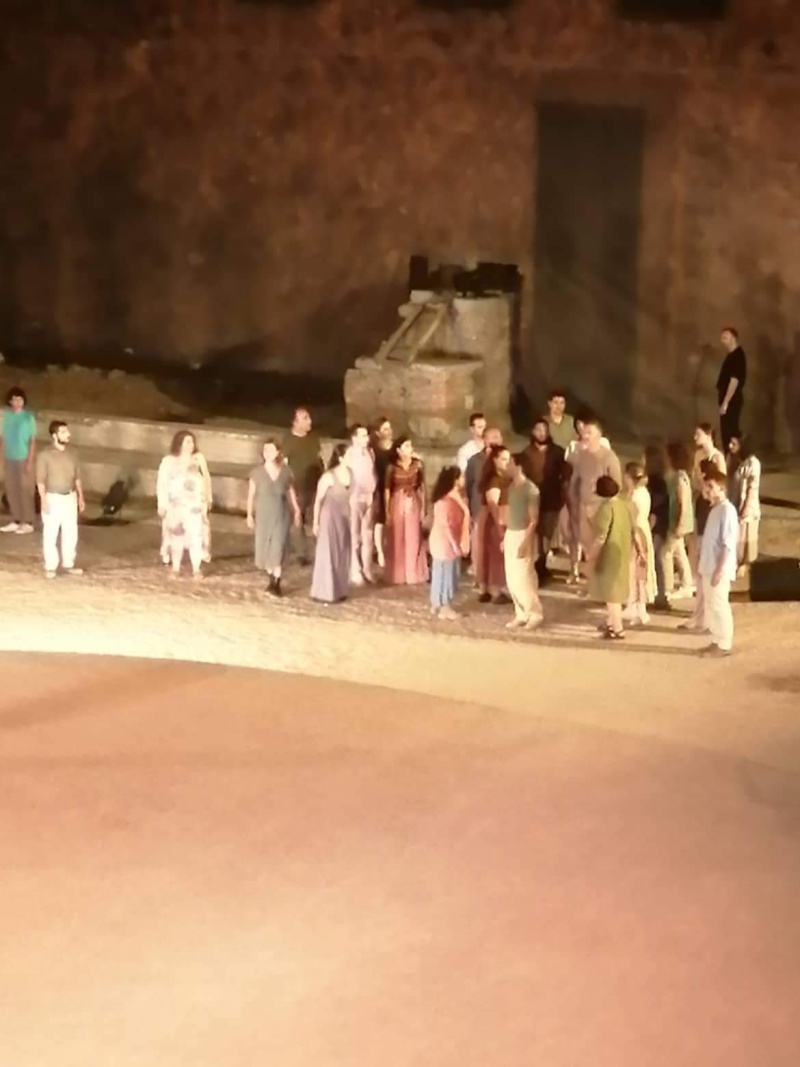
Written in 472 BC, the tragedy of Aeschylus is perhaps the oldest record of events in Greek history in the theatre. In Susa, the Persian capital, the citizens left behind and their queen, Atossa, who is tormented by bad omens, await news of Xerxes' war operation in Greece. A messenger announces the gruesome outcome of the Battle of Salamis: the Persian army and its elite commanders have been crushed. Atossa and Choros summon the ghost of Darius to guide them. The glorious king condemns the arrogance of Xerxes, who wanted to tame nature and divine will, and foresees more and more disasters. With the arrival of Xerxes, the crush culminates. The scale now leans decisively towards the horror of the end.
The play runs through endless lists of names: those who first lit the way to hope, victory and sameness, now fall one by one, lost in the darkness of a place ravaged, a people on the verge of horror, reason and obedience.
The Persians as a tragedy of humanity, as a microsystem reflecting issues of existence and coexistence, unresolved over the centuries, become, under the directorial direction of Karanjas, a common place for a conversation that indirectly illuminates the multiple global impasse of today. The theater is the public space, the Church of the Municipality, the City. The Persian Dance, the “communion”, begins with faith and obedience, ending, after annihilation, an unorganized crowd without a guide and a reference point.
Photos
Description
Contributors