
Interview
Interview with Matina Pergioudaki
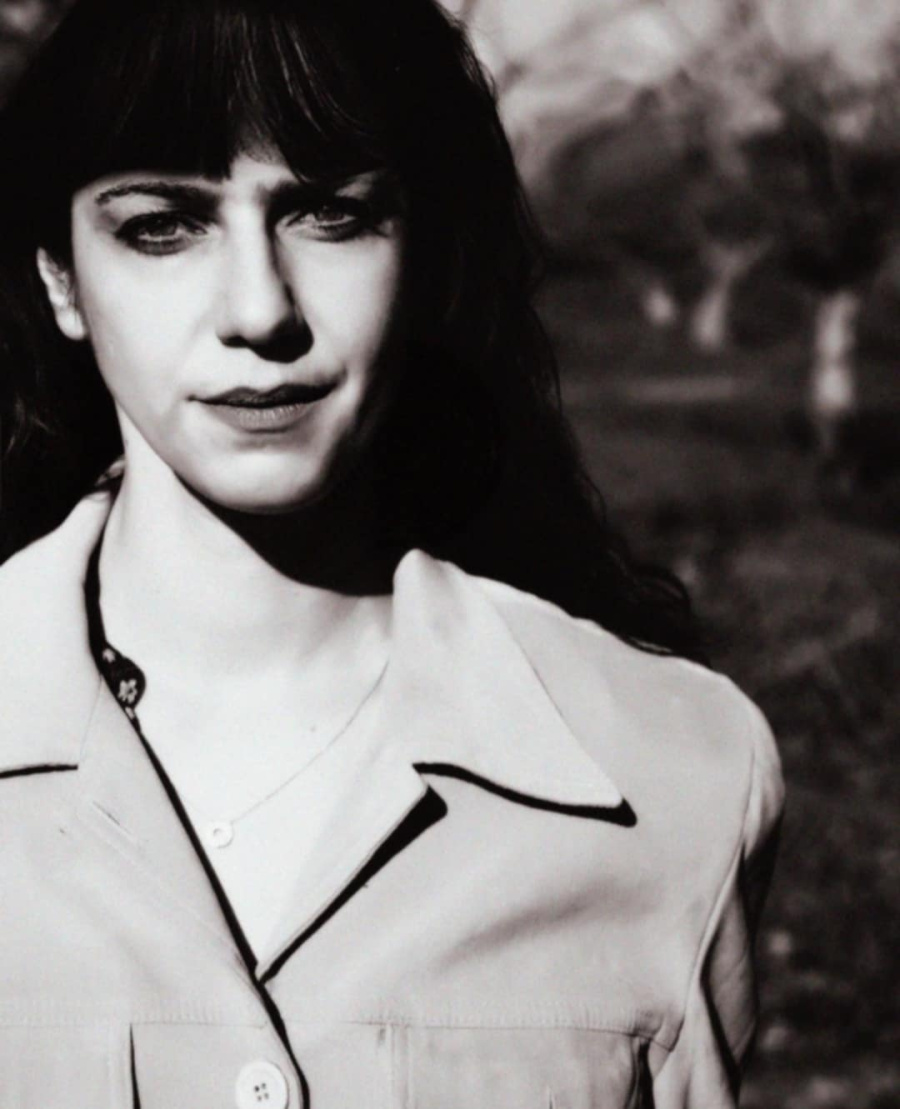
Matina Pergioudaki talks to me about the French comedy she is currently participating in, "Knock or the triumph of medicine" by Jules Romain, directed by Argyros Chiotis. I talked to her about the show, the satirical element that prevails, the multi-faceted characters that make up the show and the unconscious "I consume therefore I exist" that prevails nowadays..
Would you like to introduce us to the play?
Knock is a French comedy written in 1923 which tells us about a doctor who leaves a provincial town and leaves his practice to someone we're not exactly sure is a doctor. Throughout the play we watch the manipulation of the residents, through various tricks and tricks and also through a patronising strategy. What makes the play interesting to me is how gullible and naive the residents are towards him. How much the quiet in which they live creates an ease for them in swallowing Dr. Knock's findings. They seem to have no identity and through illness acquire one.
Is the play a satire towards marketing and the times we live in?
Yes of course that's why I say that the doctor gives them an "identity" so they feel they exist as individuals...and the interesting thing is, it's all done through a sales process. Their ignorance erodes them and they easily believe that yes, they are patients. The methods Knock uses to persuade do indeed exist in books and manuals of persuasion. It's a bit scary, it's a hilarious reality though.
How easy is it to be misled by the market rules that govern us?
I think when there is a constant sense of unfulfillment, boredom and all this speed of things happening around us, we don't understand what our desire really is. Misdirection follows as a natural result in the chaos of too many choices. Choices and needs created from the outside. I am not sure if they are real. There is unconsciously the "I consume therefore I exist". We become vulnerable and gullible. We seem to need more discernment to understand what we really need.
While it was written in 1923 it is still relevant today, did you find common ground?
Of course, and because of the pandemic we've gone through relatively recently combined with the pandemic that existed back then may have influenced the way it's written. What was interesting to me was the research we did on the author who is classified in a movement called unanimistism and he himself is considered a peacemaker and therefore the action of the story is set in a peaceful province where suddenly all of this is shaken up. Also the author advocates something peaceful where this for any era hides something revolutionary. I was also intrigued by the multi-faceted nature of the heroes, the sarcasm and farce that is present. Having worked with Argyro before, I knew she had an eye for bringing things into the here and now with a winking and tickling humour. So we created the condition of an experiment. It made the play even more interesting.
Would you like to talk to me about the peculiarities of French comedy?
French playwrights like Marivaux and Molière used to satirize mostly. To create from a subject a story that satirizes people who suffer and are victimized by someone, but of course they also satirized the dominant - the ruler. So that makes this dichotomy interesting.
Comment on Argyro Chiotis' new position as Artistic Director.
I am of course very happy because Argyro is a very beautiful person who loves what she does and works seriously, and while she is a soft-spoken person, at the same time she is dynamic and knows how to make decisions with substance and values. She has important ideas and innovative ideas and I think that as long as she can in such an institution she will seek to create renewing conditions and work, with respect to her predecessors.