Synopsis
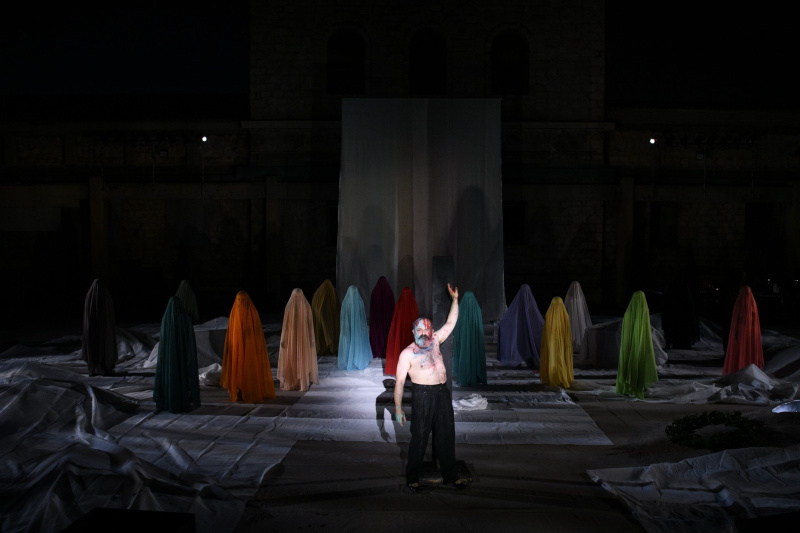
The Bacchus Euripides — the tragedy of the Greeks, rulers and peoples, according to Jan Kot — was written in the third decade of the Peloponnesian War, when history was already in tatters, and chronicles the arrival of Dionysus in Thebes. Euripides composed it during the years of his stay in Macedonia, where he came into contact with the Dionysian cult. When the god Dionysus arrives in Thebes, King Pentheus refuses to see his first cousin as God and through his authority makes it illegal to spread the new religion of course. His refusal raises the message of the god who, in a tragic reversal of persecutor and persecuted, leads Pentheus to annihilation by his own mother.The work is characterized by strict coherence in form but also by immense inner strength, and at the same time reveals the poet's interest in mysticism and ecstasy. The main dramatic themes of the tragedy are the possibilities of the soul, human virtue, self-consciousness, prudence and fallacy, the rational and the equine element, which appear through the opposition between man and god, the very opposition from which the tragic conflict of the drama arises.