
Interview
Angeliki Papoulia guides us through the world of Arcadia
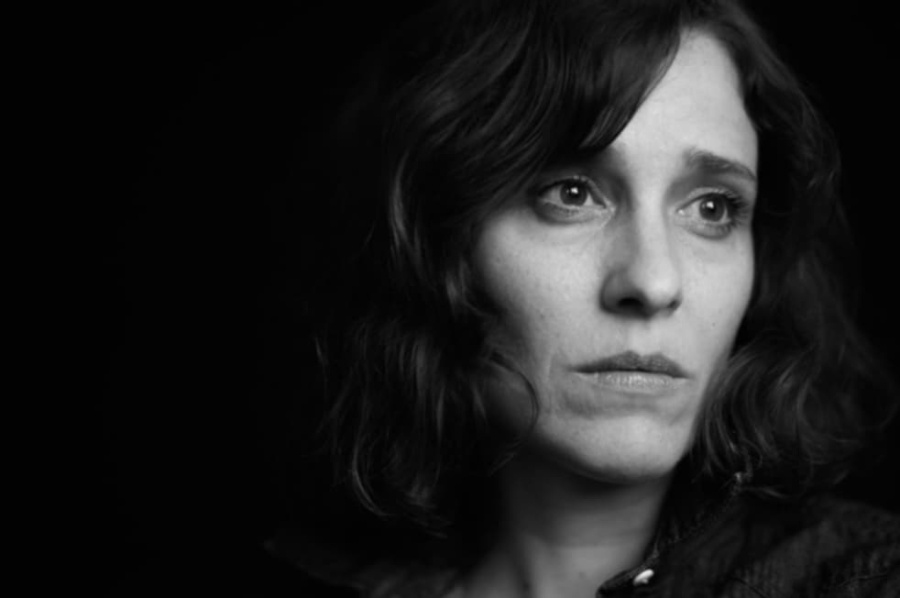
When Angeliki came to the café where we had made an appointment to talk, the first question I asked her was whether it was really her. It was such a great pleasure and the anticipation of years to talk with her that luck brought us to discuss one of the best Greek films of recent years.
Did you expect when the film began screening this positive response from audiences and critics?
I remember wondering what the reception of the film would be. I wasn't at all sure, I didn't know if the audience would respond, if they would be moved, if they would be able to connect with the film. Because we're talking about a special film in the sense that somehow you have to kind of go along with it and accept this world that it proposes. So I really had no idea. Later on when I saw the acceptance I was happy because it was difficult shooting conditions with a story that basically tries to connect two worlds which is not easy and simple at all. But it manages to connect the physical with the metaphysical, the imaginary with the realistic, the dead with the living and the audience connected. For me this is a great joy and surprise.
When George told you about the film and the script, how did you react?
I liked it very much. At first he gave me the script and I read it, I thought it was great. I think a lot of the success of the film is due to the well-written script. A script that any questions one might have while reading it, it justifies and solves. It has answers for all the details that arise. The script creates and articulates the world of the dead in a very detailed and meaningful way, closing all possible questions or queries both emotionally and practically. I think it's very complete. So after I read it I wanted to be in the movie right away. I love it when cinema asks those kinds of questions. It's necessary.
Are there moments when we as the living torture the dead by keeping them alive with our thoughts?
The film deals with this, that the living don't let the dead go, rest and live where they live. There is a haunting that is difficult to shake off. Whether living or dead. It's something almost obsessive. Loss is quite unsettling and haunting. You're obsessed with it.
What was it like for you to play Katerina, what difficulties did you face?
At the beginning George and I started out in rehearsals looking for what it means that Katerina is not alive. We were wondering how this woman could be, how she behaves, how she exists if she doesn't exist. That was the complicated part. By rehearsing and trying different things, we came up with what the film actually ends up being and what the visuals are. That the world of the living and the world of the dead are next to each other - next to each other they coexist and are both " real". So as real as the living John is, as real as Katerina is. So we decided that there should be no element of dead with all that the word dead may imply. But to emphasize how a dead person is as human as a living person can be. We also got to a point of wondering if the dead are more alive than the living and the living have been deadened and are like zombies just moving through everyday life dumbed down. Then we wondered how Katerina exists with Yannis who is basically together all the time in the film but they never speak, they exist together but he never sees her even though she tries to make her presence felt in any way. We kept trying to find out how these two characters communicate even though they don't communicate verbally.
Comment on this mix of metaphysical-physical and realism with fantasy that coexist?
The fact that these two worlds are parallel and completely equal is something we discussed a lot in rehearsals. As real as the world of the living is, so is the world of the dead; it just has some special rules that you understand in the film because it constantly puts you in and shows you what's going on. Katerina, because she is new to this world, has to learn these rules and this new world. I find it very interesting that she learns these rules so quickly and moves on. They are two characters who each move on with a different quest but eventually after seeing each other even for so little they can separate. It's as if they had to go on a whole journey again to meet again. This journey has all the things you mentioned. It also has sensuality but also mystery.
Do you believe in the metaphysical?
I believe that reality is not only what we see around us. There are so many things that we don't see and don't perceive. I have always had and still have these kinds of quests about what happens when we die and what it means.
How do you deal with absence?
There are times when I think that when someone is gone something is over so I grieve. But at the same time there are long periods where I think nothing is over. Even if someone is practically not gone but the relationship continues with that person even though you don't see them every day and you don't touch them or talk to them in everyday life. Those are the two ways I deal with loss and they complement each other.
Comment on the element of tradition and the songs that are heard in the film.
The polyphonic came into the film as an element of George's background. I think in the film this scene is cathartic and particularly moving. It's like the world of the dead is magnified as we watch them walk for so long. I think it's a necessary element that elevates the film.
Having been a part of many films of this new wave in Greek cinema, would you like to comment?
What I see and understand is that there has been a very big effort by people completely different from each other, with different perspectives on cinema, with different influences, different pursuits and different stories that each one has to tell, but nevertheless I think there was a moment when they found the freedom and courage to say what they want as they want. Without censorship and without fear. It was as if the directors, the writers, the actors, the producers, the technicians and everyone took matters into their own hands.
A packed Epidaurus with applause and performing your favorite heroine or an Oscar night where you are nominated?
Since I can't choose, I'll tell you what I like about each. I like theater a lot for the continuity it has and the flow. Cinema on the other hand doesn't have a flow but it creates something urgent which is very creative because there is a very specific time to do what you are supposed to do, which is the opposite of theatre. In cinema, time is so concentrated that it's like it's exploding. In theatre I find the flow and in cinema something like a launch. That's what fascinates me in each.
If you were given a big budget and the opportunity to direct which five actresses would you choose?
Liv Ullman I would definitely choose, Laura Dern, Anna Karina, Monica Vitti and Julian Moore.
* Interview contains spoilers for the film Arcadia